Oxford University Press
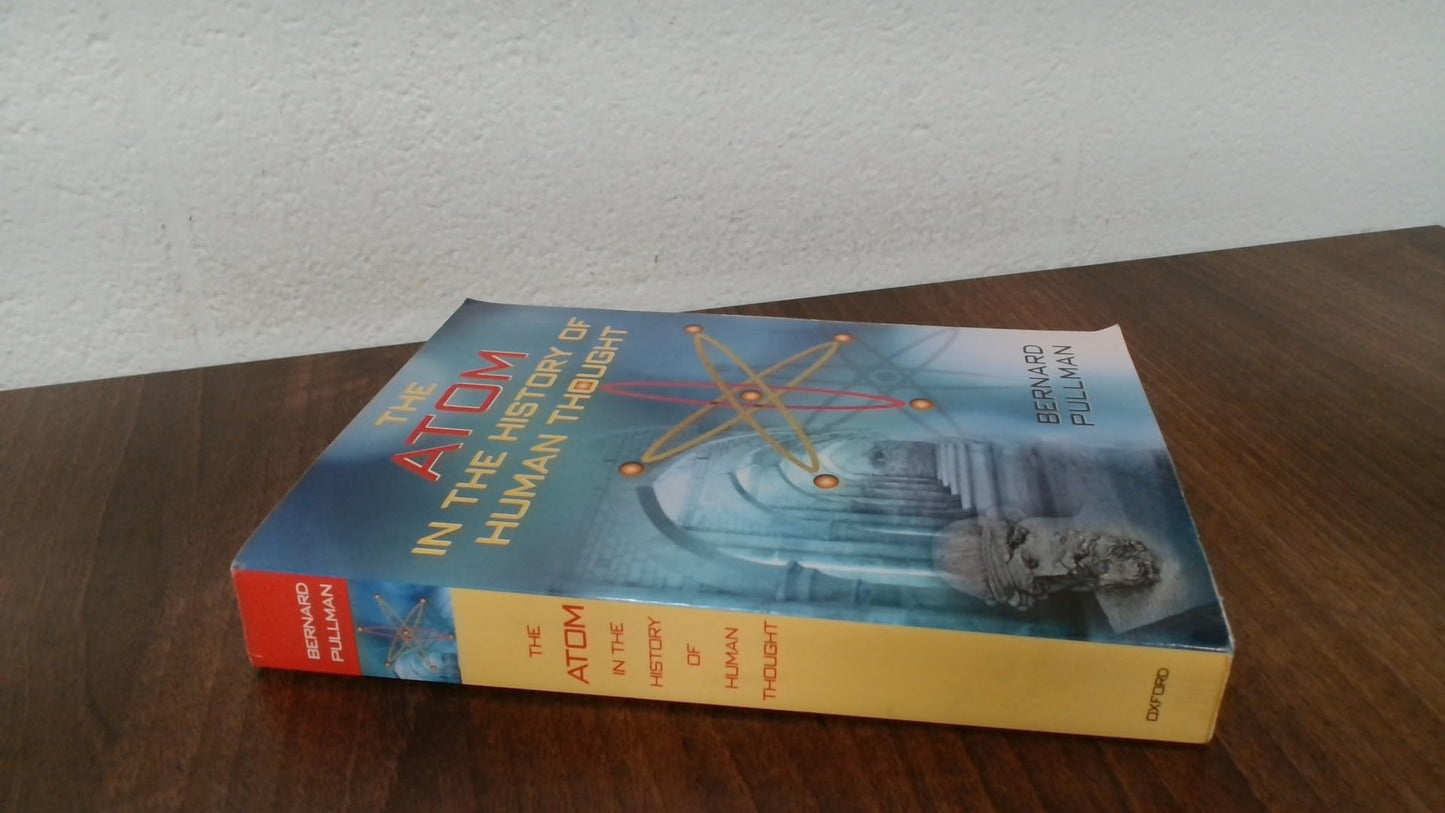
Atom in the History of Human Thought
Regular price
$22.95 USD
Regular price
Sale price
$22.95 USD
Unit price
per
Shipping calculated at checkout.
Couldn't load pickup availability
Title: Atom in the History of Human Thought
Author: Bernard Pullman
ISBN: 9780195150407
Publisher: Oxford University Press
Published: 2001
Binding: Paperback
Language: English
Edition: Reprint
Number of Pages: 416
Condition Note: Excellent, unmarked copy with little wear and tight binding. We ship in recyclable American-made mailers. 100% money-back guarantee on all orders.
Publisher Description: The concept of the atom is very near scientific bedrock, touching first causes, fundamental principles, our conception of the nature of reality. This book is a translation from the French of a history of atomic thought and theory, from ancient Greece to the present day. Pullman grounds his coverage of scientific theory always in the religious and philosophical context of the times, covering the whole period of Western civilization, including in passing the major scientific philosophies of the Muslim world and India. The transition of atomism from a philosophical position to an experimental science, in the mid-19th century, is well handled, and the coverage is nicely rounded out by a treatment of the first visual proof of atoms' material existence by direct microscopic imaging of individual atoms, about ten years ago.
Author: Bernard Pullman
ISBN: 9780195150407
Publisher: Oxford University Press
Published: 2001
Binding: Paperback
Language: English
Edition: Reprint
Number of Pages: 416
Condition Note: Excellent, unmarked copy with little wear and tight binding. We ship in recyclable American-made mailers. 100% money-back guarantee on all orders.
Publisher Description: The concept of the atom is very near scientific bedrock, touching first causes, fundamental principles, our conception of the nature of reality. This book is a translation from the French of a history of atomic thought and theory, from ancient Greece to the present day. Pullman grounds his coverage of scientific theory always in the religious and philosophical context of the times, covering the whole period of Western civilization, including in passing the major scientific philosophies of the Muslim world and India. The transition of atomism from a philosophical position to an experimental science, in the mid-19th century, is well handled, and the coverage is nicely rounded out by a treatment of the first visual proof of atoms' material existence by direct microscopic imaging of individual atoms, about ten years ago.