The Catholic University of America Press
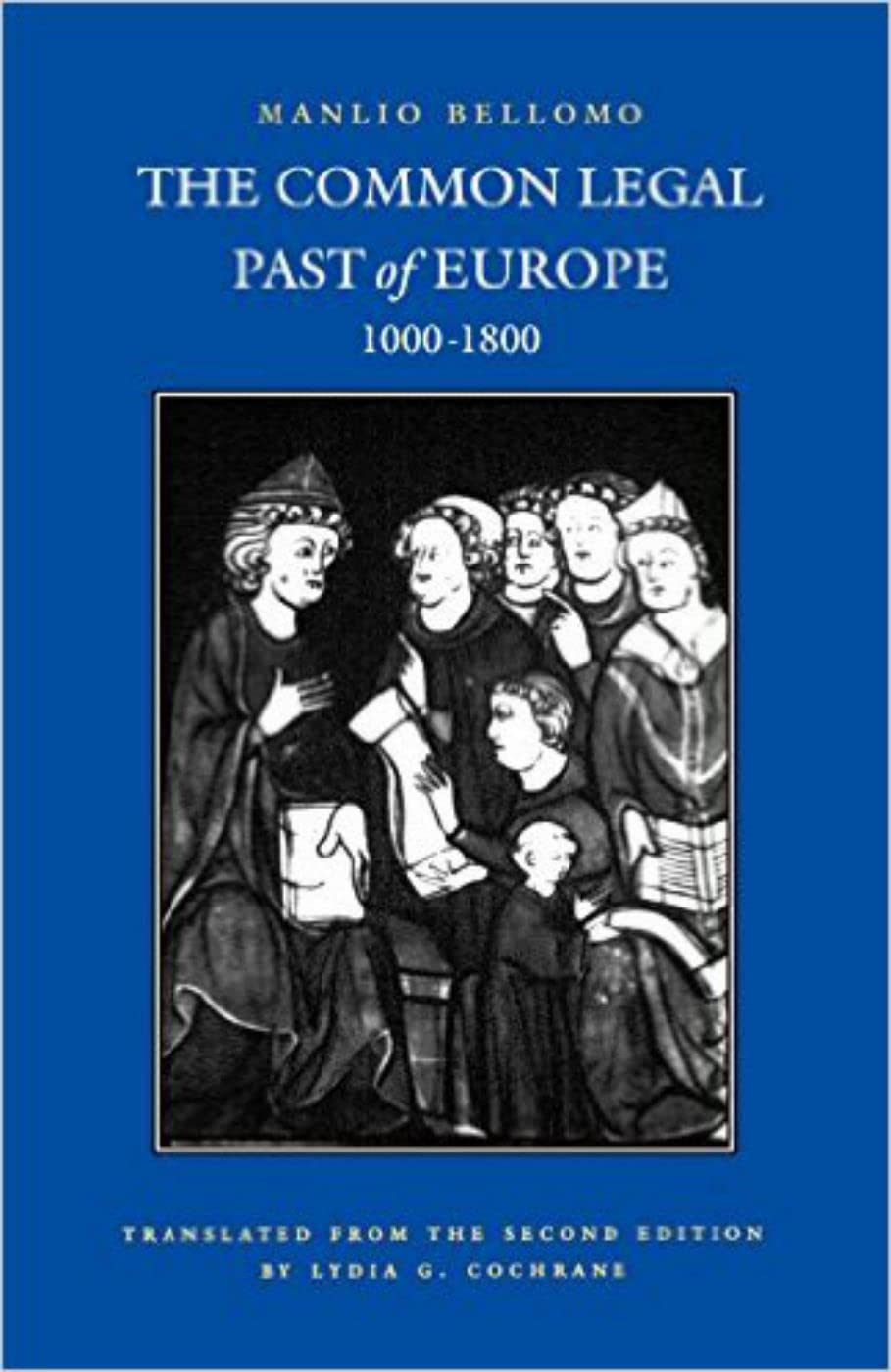
Common Legal Past of Europe, 1000-1800
Regular price
$10.95 USD
Regular price
Sale price
$10.95 USD
Unit price
per
Shipping calculated at checkout.
Couldn't load pickup availability
Title: Common Legal Past of Europe, 1000-1800
Author: Manlio Bellomo
ISBN: 9780813208145
Publisher: The Catholic University of America Press
Published: 1995
Binding: Paperback
Language: English
Number of Pages: 252
Condition Note: Clean, unmarked copy with some edge wear. Good binding. Dust jacket included if issued with one. We ship in recyclable American-made mailers. 100% money-back guarantee on all orders.
Publisher Description: Written with a vigor and passion rarely found in a scholarly text, this broad history of the western European legal tradition is now available in an elegant and lucid translation from the original Italian. Here Manlio Bellomo looks back to a time when Europe had a common law that transcended national and legal boundaries. This common law, which the author calls the ius commune, developed in the twelfth century from the fusion of Roman, canon, and feudal law, and held sway for centuries until several factors ultimately conspired to undermine its influence. Linking his extensive history to modern-day concerns, Bellomo argues that the codification that occurred in European countries during the eighteenth and nineteenth centuries has introduced ambiguity, rigidity, and uncertainty into legal systems. A new common law for Europe, he asserts, would provide a much better vehicle for legal change and development in a time when the economic barriers between European nations are crumbling. Having set the stage for a historical treatment of the topic, Bellomo then describes the beginnings of the ius commune in the schools of the twelfth century. He explains how the iura propria, or local laws, emerged from the unifying norms and principles of the ius commune. Bellomo uses carefully chosen examples to illustrate how for centuries the ius commune permeated every aspect of the iura propria, marking European law indelibly with its stamp. He discusses the great jurists who gave common law its intellectual vigor - Gratian, Accursius, Odofredus, Cinus, and Bartolus - and concludes with an account of the humanist jurists of the fifteenth, sixteenth, and early seventeenth centuries.
Author: Manlio Bellomo
ISBN: 9780813208145
Publisher: The Catholic University of America Press
Published: 1995
Binding: Paperback
Language: English
Number of Pages: 252
Condition Note: Clean, unmarked copy with some edge wear. Good binding. Dust jacket included if issued with one. We ship in recyclable American-made mailers. 100% money-back guarantee on all orders.
Publisher Description: Written with a vigor and passion rarely found in a scholarly text, this broad history of the western European legal tradition is now available in an elegant and lucid translation from the original Italian. Here Manlio Bellomo looks back to a time when Europe had a common law that transcended national and legal boundaries. This common law, which the author calls the ius commune, developed in the twelfth century from the fusion of Roman, canon, and feudal law, and held sway for centuries until several factors ultimately conspired to undermine its influence. Linking his extensive history to modern-day concerns, Bellomo argues that the codification that occurred in European countries during the eighteenth and nineteenth centuries has introduced ambiguity, rigidity, and uncertainty into legal systems. A new common law for Europe, he asserts, would provide a much better vehicle for legal change and development in a time when the economic barriers between European nations are crumbling. Having set the stage for a historical treatment of the topic, Bellomo then describes the beginnings of the ius commune in the schools of the twelfth century. He explains how the iura propria, or local laws, emerged from the unifying norms and principles of the ius commune. Bellomo uses carefully chosen examples to illustrate how for centuries the ius commune permeated every aspect of the iura propria, marking European law indelibly with its stamp. He discusses the great jurists who gave common law its intellectual vigor - Gratian, Accursius, Odofredus, Cinus, and Bartolus - and concludes with an account of the humanist jurists of the fifteenth, sixteenth, and early seventeenth centuries.