YALE UNIVERSITY PRESS
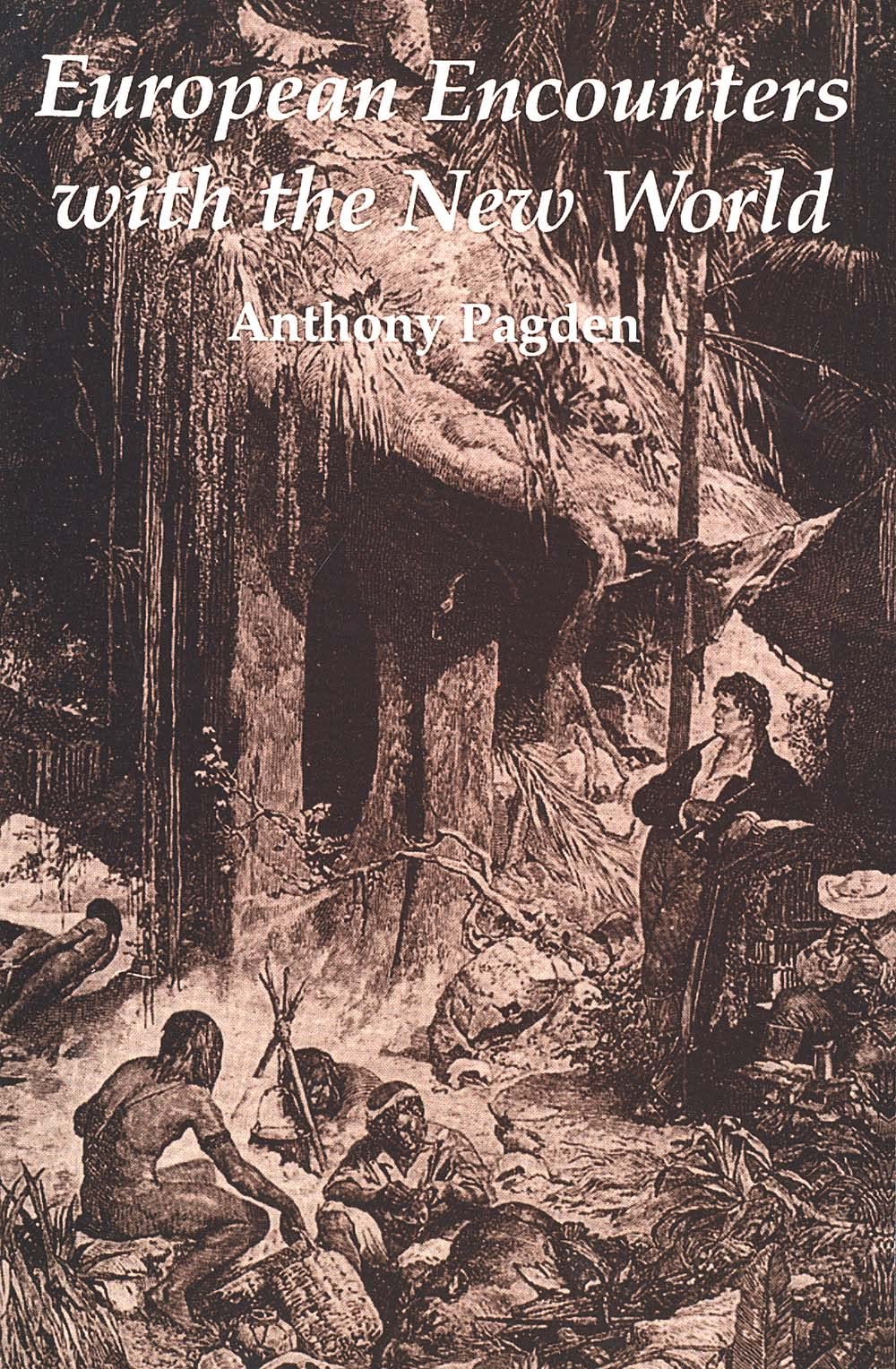
European Encounters with the New World: From Renaissance to Romanticism (Revised)
Regular price
$8.95 USD
Regular price
Sale price
$8.95 USD
Unit price
per
Shipping calculated at checkout.
Couldn't load pickup availability
Title: European Encounters with the New World: From Renaissance to Romanticism (Revised)
Author: Anthony Pagden
ISBN: 9780300059502
Publisher: YALE UNIVERSITY PRESS
Published: 1994
Binding: Paperback
Language: English
Edition: Reprint
Number of Pages: 225
Condition Note: Clean, unmarked copy with some edge wear. Good binding. Dust jacket included if issued with one. We ship in recyclable American-made mailers. 100% money-back guarantee on all orders.
Publisher Description: For more than three centuries after Columbus's voyages to America, Europeans pondered how the Old World's encounters with the New World affected European sensibilities and intellectual horizons. In this book Anthony Pagden examines some of the varied ways in which Europeans interpreted these encounters with America. Pagden explores the strategies used by Columbus and the early chroniclers of America to describe a continent and its inhabitants so deeply unfamiliar to Europeans that they seemed hardly to be real. He looks at how, in the seventeenth and eighteenth centuries, Europeans reacted in different ways to these descriptions. Some, like the Prussian explorer and naturalist Alexander von Humboldt, declared that scientific understanding before the oceanic voyages had advanced by slow steps and that the encounter with America had invigorated Europeans to make new discoveries in many directions at once. Other Europeans, particularly Enlightenment and Romantic figures, argued fiercely against the whole process of colonization and acculturation in the Americas. French philosophe Denis Diderot, for example, felt that the European experience of America had led to an increased familiarity with all that was potentially strange and unusual--the creation of a global village--and that this had resulted in a steady decline in that sense of wonder that was the principal incentive for all scientific inquiry. The German philosopher Johann Gottfried Herder proposed that all cultures must recognize their essential alienness and that the single world culture that colonization and commerce had helped to create must be allowed to revert to its natural condition of plurality. In an exploration of these and other responses, Pagden throws a vivid new light on the intellectual consequences of Europe's encounter with the Americas.
Author: Anthony Pagden
ISBN: 9780300059502
Publisher: YALE UNIVERSITY PRESS
Published: 1994
Binding: Paperback
Language: English
Edition: Reprint
Number of Pages: 225
Condition Note: Clean, unmarked copy with some edge wear. Good binding. Dust jacket included if issued with one. We ship in recyclable American-made mailers. 100% money-back guarantee on all orders.
Publisher Description: For more than three centuries after Columbus's voyages to America, Europeans pondered how the Old World's encounters with the New World affected European sensibilities and intellectual horizons. In this book Anthony Pagden examines some of the varied ways in which Europeans interpreted these encounters with America. Pagden explores the strategies used by Columbus and the early chroniclers of America to describe a continent and its inhabitants so deeply unfamiliar to Europeans that they seemed hardly to be real. He looks at how, in the seventeenth and eighteenth centuries, Europeans reacted in different ways to these descriptions. Some, like the Prussian explorer and naturalist Alexander von Humboldt, declared that scientific understanding before the oceanic voyages had advanced by slow steps and that the encounter with America had invigorated Europeans to make new discoveries in many directions at once. Other Europeans, particularly Enlightenment and Romantic figures, argued fiercely against the whole process of colonization and acculturation in the Americas. French philosophe Denis Diderot, for example, felt that the European experience of America had led to an increased familiarity with all that was potentially strange and unusual--the creation of a global village--and that this had resulted in a steady decline in that sense of wonder that was the principal incentive for all scientific inquiry. The German philosopher Johann Gottfried Herder proposed that all cultures must recognize their essential alienness and that the single world culture that colonization and commerce had helped to create must be allowed to revert to its natural condition of plurality. In an exploration of these and other responses, Pagden throws a vivid new light on the intellectual consequences of Europe's encounter with the Americas.