Duke University Press
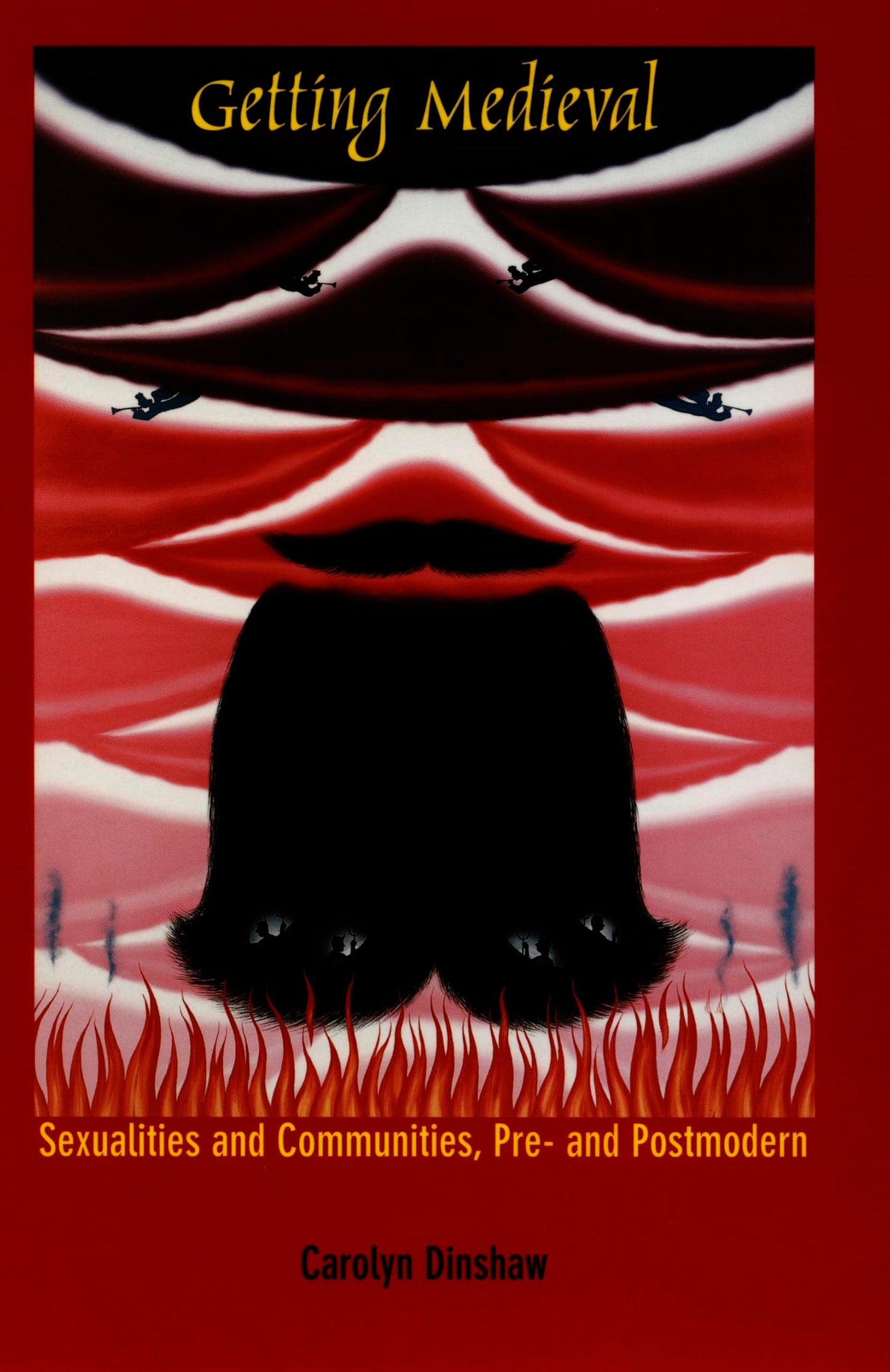
Getting Medieval: Sexualities and Communities, Pre- and Postmodern
Regular price
$13.95 USD
Regular price
Sale price
$13.95 USD
Unit price
per
Shipping calculated at checkout.
Couldn't load pickup availability
Title: Getting Medieval: Sexualities and Communities, Pre- and Postmodern
Author: Carolyn Dinshaw
ISBN: 9780822323655
Publisher: Duke University Press
Published: 1999
Binding: Paperback
Language: English
Number of Pages: 360
Condition Note: Clean, unmarked copy with some edge wear. Good binding. Dust jacket included if issued with one. We ship in recyclable American-made mailers. 100% money-back guarantee on all orders.
Publisher Description: In Getting Medieval Carolyn Dinshaw examines communities--dissident and orthodox--in late-fourteenth and early-fifteenth-century England to create a new sense of queer history. Reaching beyond both medieval and queer studies, Dinshaw demonstrates in this challenging work how intellectual inquiry into pre-modern societies can contribute invaluably to current issues in cultural studies. In the process, she makes important connections between past and present cultures that until now have not been realized. In her pursuit of historical analyses that embrace the heterogeneity and indeterminacy of sex and sexuality, Dinshaw examines canonical Middle English texts such as the Canterbury Tales and TheBook of Margery Kempe. She examines polemics around the religious dissidents known as the Lollards as well as accounts of prostitutes in London to address questions of how particular sexual practices and identifications were normalized while others were proscribed. By exploring contemporary (mis)appropriations of medieval tropes in texts ranging from Quentin Tarantino's Pulp Fiction to recent Congressional debates on U.S. cultural production, Dinshaw demonstrates how such modern media can serve to reinforce constrictive heteronormative values and deny the multifarious nature of history. Finally, she works with and against the theories of Michel Foucault, Homi K. Bhabha, Roland Barthes, and John Boswell to show how deconstructionist impulses as well as historical perspectives can further an understanding of community in both pre- and postmodern societies. This long-anticipated volume will be indispensable to medieval and queer scholars and will be welcomed by a larger cultural studies audience.
Author: Carolyn Dinshaw
ISBN: 9780822323655
Publisher: Duke University Press
Published: 1999
Binding: Paperback
Language: English
Number of Pages: 360
Condition Note: Clean, unmarked copy with some edge wear. Good binding. Dust jacket included if issued with one. We ship in recyclable American-made mailers. 100% money-back guarantee on all orders.
Publisher Description: In Getting Medieval Carolyn Dinshaw examines communities--dissident and orthodox--in late-fourteenth and early-fifteenth-century England to create a new sense of queer history. Reaching beyond both medieval and queer studies, Dinshaw demonstrates in this challenging work how intellectual inquiry into pre-modern societies can contribute invaluably to current issues in cultural studies. In the process, she makes important connections between past and present cultures that until now have not been realized. In her pursuit of historical analyses that embrace the heterogeneity and indeterminacy of sex and sexuality, Dinshaw examines canonical Middle English texts such as the Canterbury Tales and TheBook of Margery Kempe. She examines polemics around the religious dissidents known as the Lollards as well as accounts of prostitutes in London to address questions of how particular sexual practices and identifications were normalized while others were proscribed. By exploring contemporary (mis)appropriations of medieval tropes in texts ranging from Quentin Tarantino's Pulp Fiction to recent Congressional debates on U.S. cultural production, Dinshaw demonstrates how such modern media can serve to reinforce constrictive heteronormative values and deny the multifarious nature of history. Finally, she works with and against the theories of Michel Foucault, Homi K. Bhabha, Roland Barthes, and John Boswell to show how deconstructionist impulses as well as historical perspectives can further an understanding of community in both pre- and postmodern societies. This long-anticipated volume will be indispensable to medieval and queer scholars and will be welcomed by a larger cultural studies audience.