Humanum Academic Press
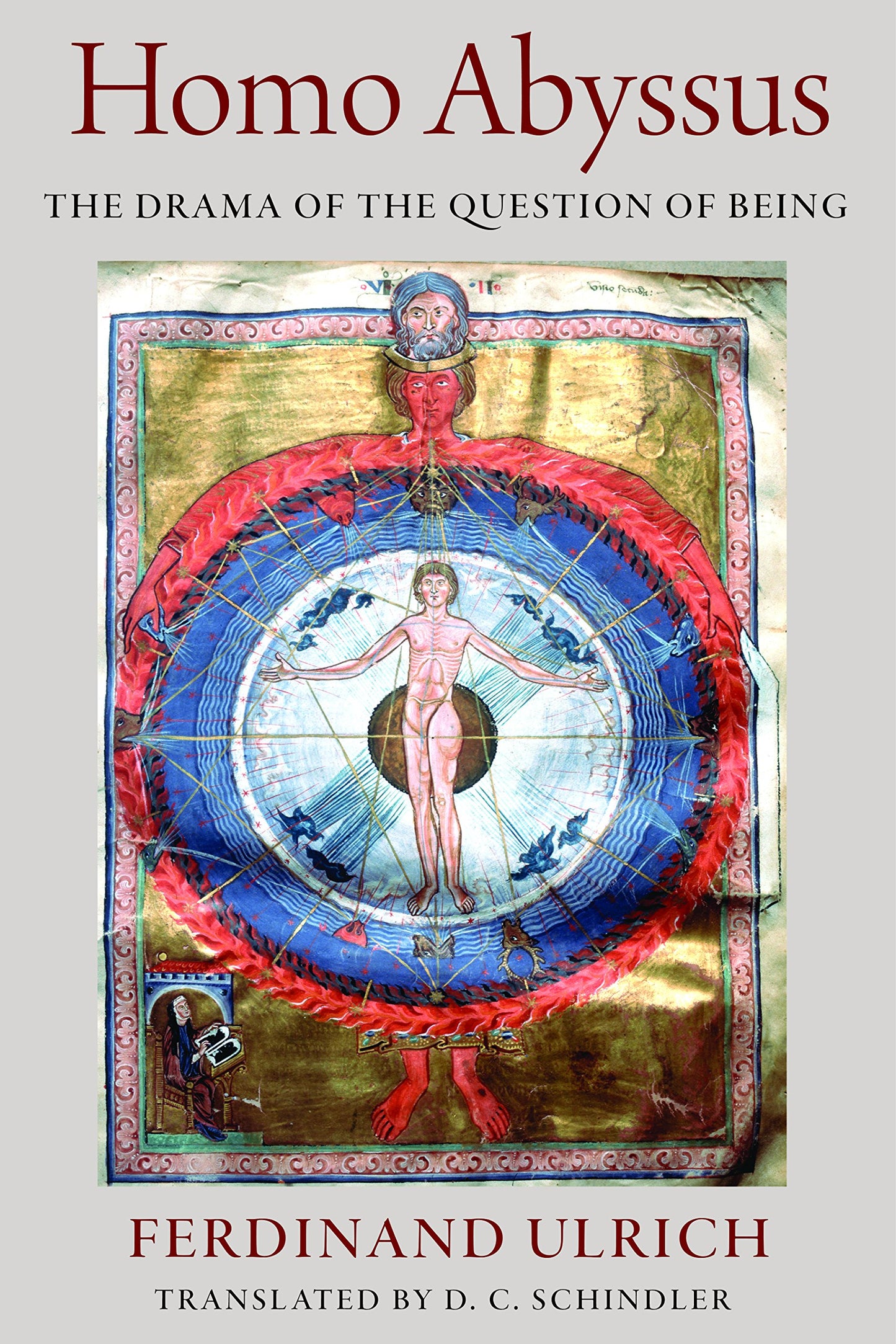
Homo Abyssus: The Drama of the Question of Being
Regular price
$89.95 USD
Regular price
Sale price
$89.95 USD
Unit price
per
Shipping calculated at checkout.
Couldn't load pickup availability
Title: Homo Abyssus: The Drama of the Question of Being
Author: Ferdinand Ulrich
ISBN: 9781948195010
Publisher: Humanum Academic Press
Published: 2018
Binding: Hardcover
Language: English
Number of Pages: 584
Condition Note: Clean, unmarked copy with some edge wear. Good binding. Dust jacket included if issued with one. We ship in recyclable American-made mailers. 100% money-back guarantee on all orders.
Publisher Description: Homo Abyssus: The Drama of the Question of Being is one of the most significant works of Catholic philosophy in the twentieth century. In this speculative appropriation of Aquinas, Ferdinand Ulrich lays out a vision of being as an image of divine goodness, drawing out as-yet-undiscovered treasures from Aquinas's texts through a fundamental engagement with modern philosophy, above all Hegel and Heidegger. One of the most unique features of this vision is, as Hans Urs von Balthasar observed, "It stands face-to-face with the innermost mysteries of Christian revelation, and opens them up, without ever departing from the strictly philosophical sphere. In this respect, it overcomes the baleful dualism between philosophy and theology perhaps more successfully than any previous attempt." The first part of the book offers a fundamental metaphysics, expounding in detail the basic structure of being in the light of creation ex nihilo interpreted as an act of radical generosity. This discussion presents novel insights into traditional themes such as the real distinction between essence and existence, participation, causality, and the analogy of being; and it explores from the same perspective of radical generosity themes associated more with modern philosophy, such as the relationship between being and nothingness, the ontological difference, and being and time. The second part of the book is a speculative anthropology, which proposes to think through the constitution of the human being as a kind of dynamic exemplar of the meaning of being: man not only shows the meaning of being, but co-enacts it in his relation to himself, to the world, and to God. In addition to offering the first major work of Ulrich to appear in English, this translation includes a substantial introduction by Martin Bieler, and a helpful lexicon to help elucidate the book's unusual vocabulary.
Author: Ferdinand Ulrich
ISBN: 9781948195010
Publisher: Humanum Academic Press
Published: 2018
Binding: Hardcover
Language: English
Number of Pages: 584
Condition Note: Clean, unmarked copy with some edge wear. Good binding. Dust jacket included if issued with one. We ship in recyclable American-made mailers. 100% money-back guarantee on all orders.
Publisher Description: Homo Abyssus: The Drama of the Question of Being is one of the most significant works of Catholic philosophy in the twentieth century. In this speculative appropriation of Aquinas, Ferdinand Ulrich lays out a vision of being as an image of divine goodness, drawing out as-yet-undiscovered treasures from Aquinas's texts through a fundamental engagement with modern philosophy, above all Hegel and Heidegger. One of the most unique features of this vision is, as Hans Urs von Balthasar observed, "It stands face-to-face with the innermost mysteries of Christian revelation, and opens them up, without ever departing from the strictly philosophical sphere. In this respect, it overcomes the baleful dualism between philosophy and theology perhaps more successfully than any previous attempt." The first part of the book offers a fundamental metaphysics, expounding in detail the basic structure of being in the light of creation ex nihilo interpreted as an act of radical generosity. This discussion presents novel insights into traditional themes such as the real distinction between essence and existence, participation, causality, and the analogy of being; and it explores from the same perspective of radical generosity themes associated more with modern philosophy, such as the relationship between being and nothingness, the ontological difference, and being and time. The second part of the book is a speculative anthropology, which proposes to think through the constitution of the human being as a kind of dynamic exemplar of the meaning of being: man not only shows the meaning of being, but co-enacts it in his relation to himself, to the world, and to God. In addition to offering the first major work of Ulrich to appear in English, this translation includes a substantial introduction by Martin Bieler, and a helpful lexicon to help elucidate the book's unusual vocabulary.