The University of North Carolina Press
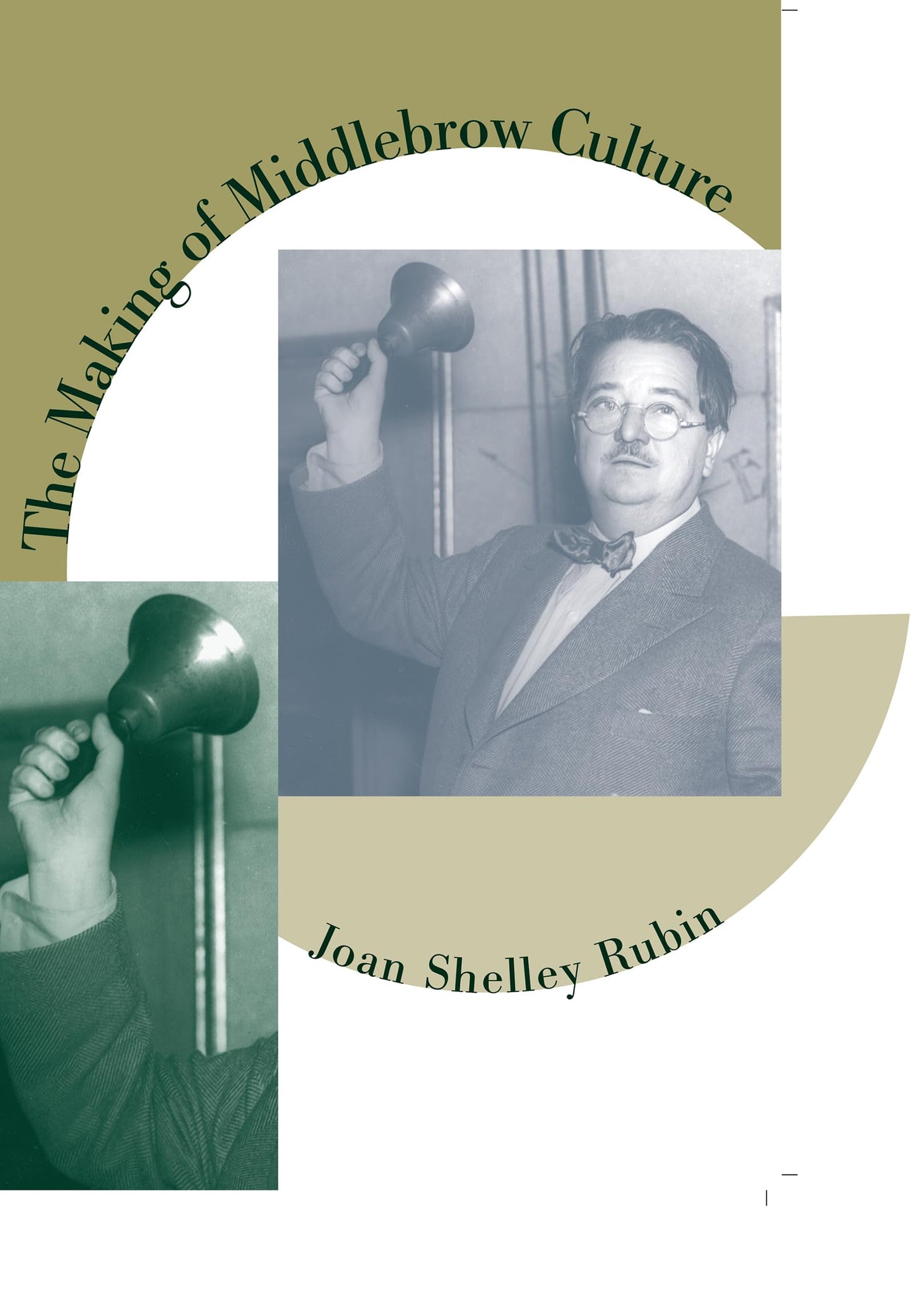
Making of Middlebrow Culture
Regular price
$9.95 USD
Regular price
Sale price
$9.95 USD
Unit price
per
Shipping calculated at checkout.
Couldn't load pickup availability
Title: Making of Middlebrow Culture
Author: Joan Shelley Rubin
ISBN: 9780807843543
Publisher: The University of North Carolina Press
Published: 1992
Binding: Paperback
Language: English
Edition: First Edition
Number of Pages: 438
Condition Note: Clean, unmarked copy with some edge wear. Good binding. Dust jacket included if issued with one. We ship in recyclable American-made mailers. 100% money-back guarantee on all orders.
Publisher Description: The proliferation of book clubs, reading groups, "outline" volumes, and new forms of book reviewing in the first half of the twentieth century influenced the tastes and pastimes of millions of Americans. By examining both the form and content of this popularization of literature, Joan Rubin recaptures here an activity that brought the humanities to the general public on an unprecedented scale. In doing so, she provides the first comprehensive analysis of the rise of American middlebrow culture and the values encompassed by it. Exploring the democratization of culture in a consumer society, Rubin concentrates on five important expressions of the middlebrow: the establishment of book clubs, including the founding of the Book-of-the-Month Club; the beginnings of "great books" programs; the creation ofthe New York Herald Tribune's book-review section; the popularity of such works as Will Durant's The Story of Philosophy; and the emergence of literary radio programs. Rubin also investigates the lives and expectations of the individuals who shaped these middlebrow enterprises--such figures as Stuart Pratt Sherman, Irita Van Doren, Henry Seidel Canby, Dorothy Canfield Fisher, John Erskine, William Lyon Phelps, Alexander Woollcott, and Clifton Fadiman. By demonstrating that an emphasis on character, liberal learning, and aesthetic training at least partly animated many of these writers, she revises the conventional view that the genteel tradition in American letters had vanished by World War I. Moreover, as she pursues the significance of these cultural intermediaries who connected elites and the masses by interpreting ideas to the public, Rubin forces a reconsideration of the boundary betweenhigh culture and popular sensibility.
Author: Joan Shelley Rubin
ISBN: 9780807843543
Publisher: The University of North Carolina Press
Published: 1992
Binding: Paperback
Language: English
Edition: First Edition
Number of Pages: 438
Condition Note: Clean, unmarked copy with some edge wear. Good binding. Dust jacket included if issued with one. We ship in recyclable American-made mailers. 100% money-back guarantee on all orders.
Publisher Description: The proliferation of book clubs, reading groups, "outline" volumes, and new forms of book reviewing in the first half of the twentieth century influenced the tastes and pastimes of millions of Americans. By examining both the form and content of this popularization of literature, Joan Rubin recaptures here an activity that brought the humanities to the general public on an unprecedented scale. In doing so, she provides the first comprehensive analysis of the rise of American middlebrow culture and the values encompassed by it. Exploring the democratization of culture in a consumer society, Rubin concentrates on five important expressions of the middlebrow: the establishment of book clubs, including the founding of the Book-of-the-Month Club; the beginnings of "great books" programs; the creation ofthe New York Herald Tribune's book-review section; the popularity of such works as Will Durant's The Story of Philosophy; and the emergence of literary radio programs. Rubin also investigates the lives and expectations of the individuals who shaped these middlebrow enterprises--such figures as Stuart Pratt Sherman, Irita Van Doren, Henry Seidel Canby, Dorothy Canfield Fisher, John Erskine, William Lyon Phelps, Alexander Woollcott, and Clifton Fadiman. By demonstrating that an emphasis on character, liberal learning, and aesthetic training at least partly animated many of these writers, she revises the conventional view that the genteel tradition in American letters had vanished by World War I. Moreover, as she pursues the significance of these cultural intermediaries who connected elites and the masses by interpreting ideas to the public, Rubin forces a reconsideration of the boundary betweenhigh culture and popular sensibility.