Yale University Press
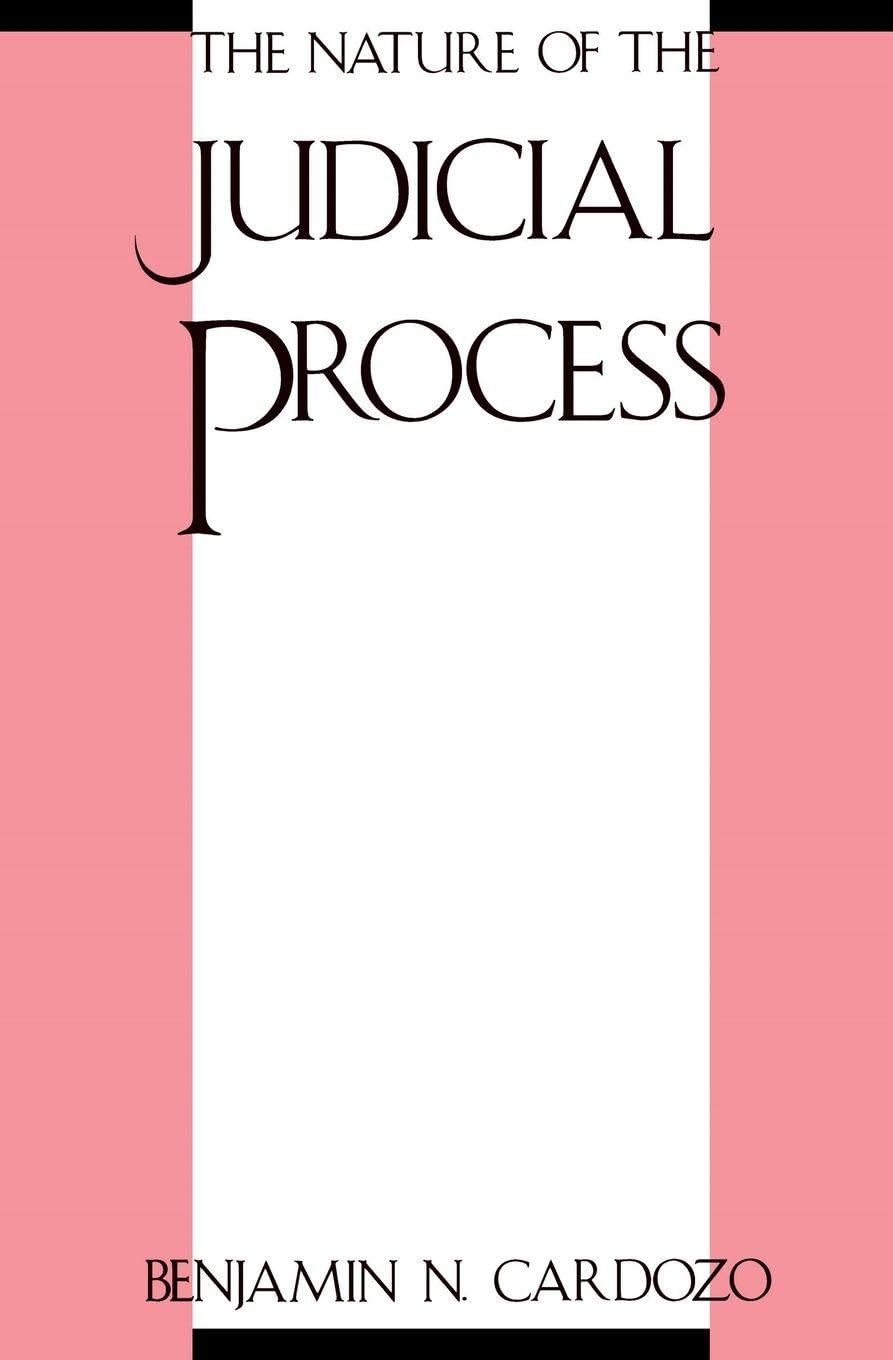
Nature of the Judicial Process
Regular price
$7.95 USD
Regular price
Sale price
$7.95 USD
Unit price
per
Shipping calculated at checkout.
Couldn't load pickup availability
Title: Nature of the Judicial Process
Author: Benjamin N Cardozo
ISBN: 9780300000337
Publisher: Yale University Press
Published: 1960
Binding: Paperback
Language: English
Number of Pages: 180
Condition Note: Excellent, unmarked copy with little wear and tight binding. We ship in recyclable American-made mailers. 100% money-back guarantee on all orders.
Publisher Description: In this famous treatise, a Supreme Court Justice describes the conscious and unconscious processes by which a judge decides a case. He discusses the sources of information to which he appeals for guidance and analyzes the contribution that considerations
Author: Benjamin N Cardozo
ISBN: 9780300000337
Publisher: Yale University Press
Published: 1960
Binding: Paperback
Language: English
Number of Pages: 180
Condition Note: Excellent, unmarked copy with little wear and tight binding. We ship in recyclable American-made mailers. 100% money-back guarantee on all orders.
Publisher Description: In this famous treatise, a Supreme Court Justice describes the conscious and unconscious processes by which a judge decides a case. He discusses the sources of information to which he appeals for guidance and analyzes the contribution that considerations