University of California Press
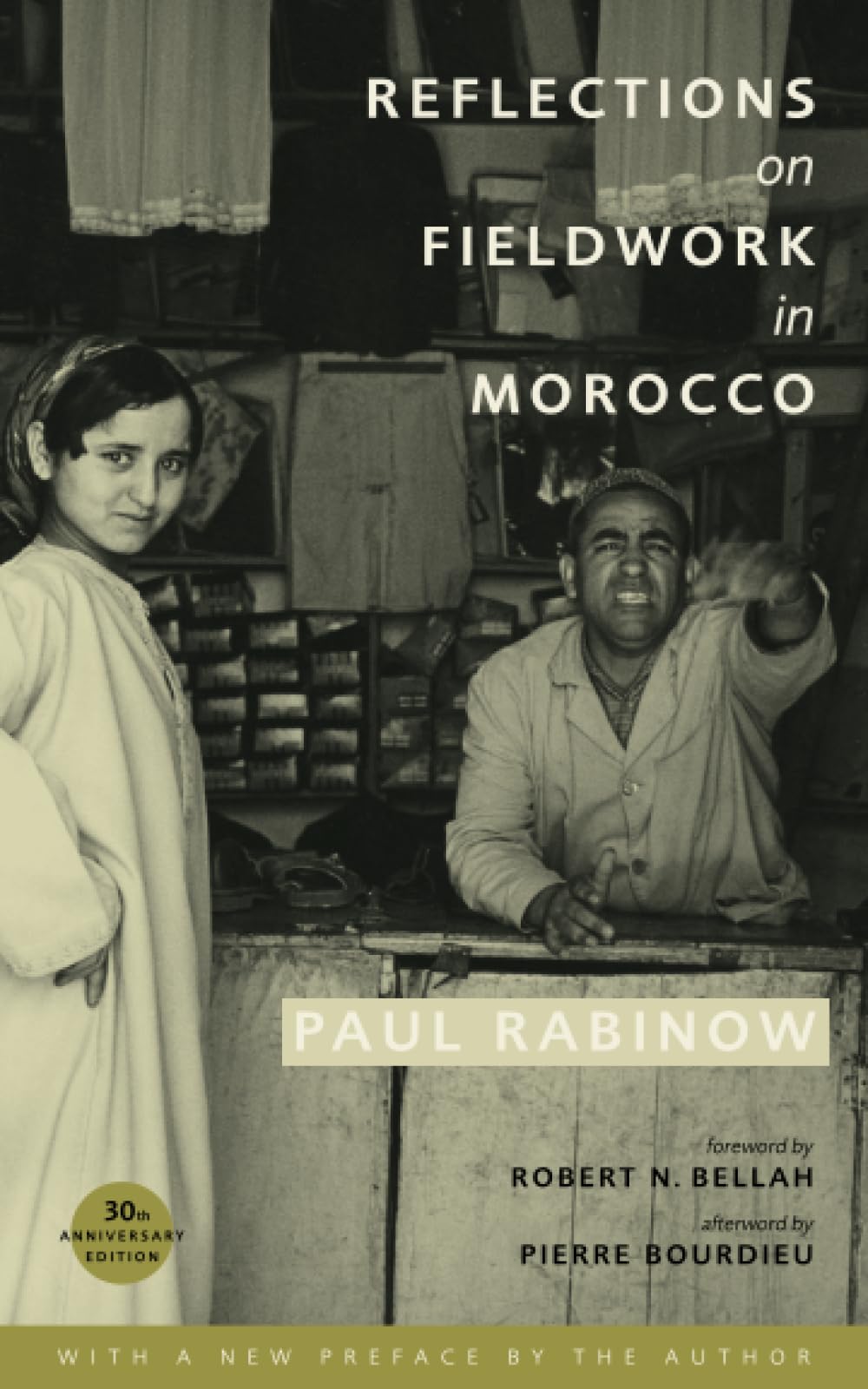
Reflections on Fieldwork in Morocco (Second Edition, Thirtieth Anniversary Edition, with a New Preface by the Author)
Regular price
$8.95 USD
Regular price
Sale price
$8.95 USD
Unit price
per
Shipping calculated at checkout.
Couldn't load pickup availability
Title: Reflections on Fieldwork in Morocco (Second Edition, Thirtieth Anniversary Edition, with a New Preface by the Author)
Author: Paul Rabinow
ISBN: 9780520251779
Publisher: University of California Press
Published: 2007
Binding: Paperback
Language: English
Edition: Second Edition, Thirtieth Anniversary Edition, with a New Preface by the Author
Number of Pages: 208
Condition Note: Excellent, unmarked copy with little wear and tight binding. We ship in recyclable American-made mailers. 100% money-back guarantee on all orders.
Publisher Description: In this landmark study, now celebrating thirty years in print, Paul Rabinow takes as his focus the fieldwork that anthropologists do. How valid is the process? To what extent do the cultural data become artifacts of the interaction between anthropologist and informants? Having first published a more standard ethnographic study about Morocco, Rabinow here describes a series of encounters with his informants in that study, from a French innkeeper clinging to the vestiges of a colonial past, to the rural descendants of a seventeenth-century saint. In a new preface Rabinow considers the thirty-year life of this remarkable book and his own distinguished career.
Author: Paul Rabinow
ISBN: 9780520251779
Publisher: University of California Press
Published: 2007
Binding: Paperback
Language: English
Edition: Second Edition, Thirtieth Anniversary Edition, with a New Preface by the Author
Number of Pages: 208
Condition Note: Excellent, unmarked copy with little wear and tight binding. We ship in recyclable American-made mailers. 100% money-back guarantee on all orders.
Publisher Description: In this landmark study, now celebrating thirty years in print, Paul Rabinow takes as his focus the fieldwork that anthropologists do. How valid is the process? To what extent do the cultural data become artifacts of the interaction between anthropologist and informants? Having first published a more standard ethnographic study about Morocco, Rabinow here describes a series of encounters with his informants in that study, from a French innkeeper clinging to the vestiges of a colonial past, to the rural descendants of a seventeenth-century saint. In a new preface Rabinow considers the thirty-year life of this remarkable book and his own distinguished career.