Archipelago
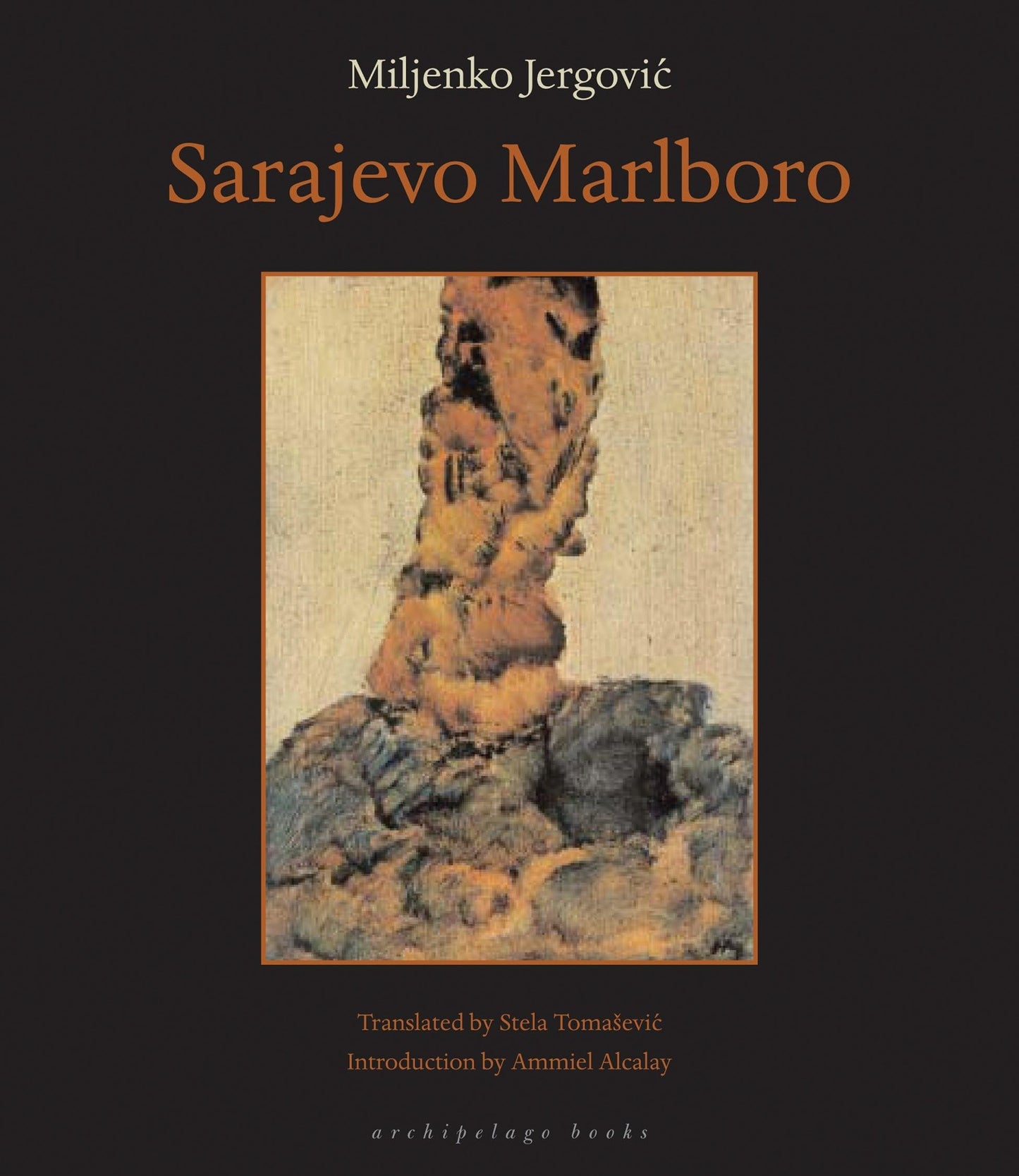
Sarajevo Marlboro
Regular price
$18.00 USD
Regular price
Sale price
$18.00 USD
Unit price
per
Shipping calculated at checkout.
Couldn't load pickup availability
Title: Sarajevo Marlboro
Author: Miljenko Jergovic
ISBN: 9780972869225
Publisher: Archipelago
Published: 2003
Binding: Paperback
Language: English
Edition: First Edition
Number of Pages: 195
Condition Note: New from the publisher
Publisher Description: A remarkable and bracing collection of "classic anti-war writing" (Richard Flanagan) from Croatian writer Miljenko Jergovic, whose piercing prose recalls Kurt Vonnegut and Aleksander Hemon Miljenko Jergovic's remarkable début collection of stories, Sarajevo Marlboro, earned him wide acclaim throughout Europe. In "melancholy, dreamlike" prose, the stories in Sarajevo Marlboro "recall Alan Lightman's Einstein's Dreams and Italo Calvino's Invisible Cities, but Jergovic's book is the strongest of the three" (Maud Newton). Croatian by birth, Jergovic spent his childhood in Sarajevo and chose to remain there throughout most of the war. These stories are distinctly of the material world, and they are shaped by Jergovic's deeply personal vision, subterranean humor, and a razor-sharp understanding of the fate of the city's young Muslims, Croats, and Serbs - the minute details of their interior lives in the foreground, the killing zone in the background.
Author: Miljenko Jergovic
ISBN: 9780972869225
Publisher: Archipelago
Published: 2003
Binding: Paperback
Language: English
Edition: First Edition
Number of Pages: 195
Condition Note: New from the publisher
Publisher Description: A remarkable and bracing collection of "classic anti-war writing" (Richard Flanagan) from Croatian writer Miljenko Jergovic, whose piercing prose recalls Kurt Vonnegut and Aleksander Hemon Miljenko Jergovic's remarkable début collection of stories, Sarajevo Marlboro, earned him wide acclaim throughout Europe. In "melancholy, dreamlike" prose, the stories in Sarajevo Marlboro "recall Alan Lightman's Einstein's Dreams and Italo Calvino's Invisible Cities, but Jergovic's book is the strongest of the three" (Maud Newton). Croatian by birth, Jergovic spent his childhood in Sarajevo and chose to remain there throughout most of the war. These stories are distinctly of the material world, and they are shaped by Jergovic's deeply personal vision, subterranean humor, and a razor-sharp understanding of the fate of the city's young Muslims, Croats, and Serbs - the minute details of their interior lives in the foreground, the killing zone in the background.