Oxford University Press
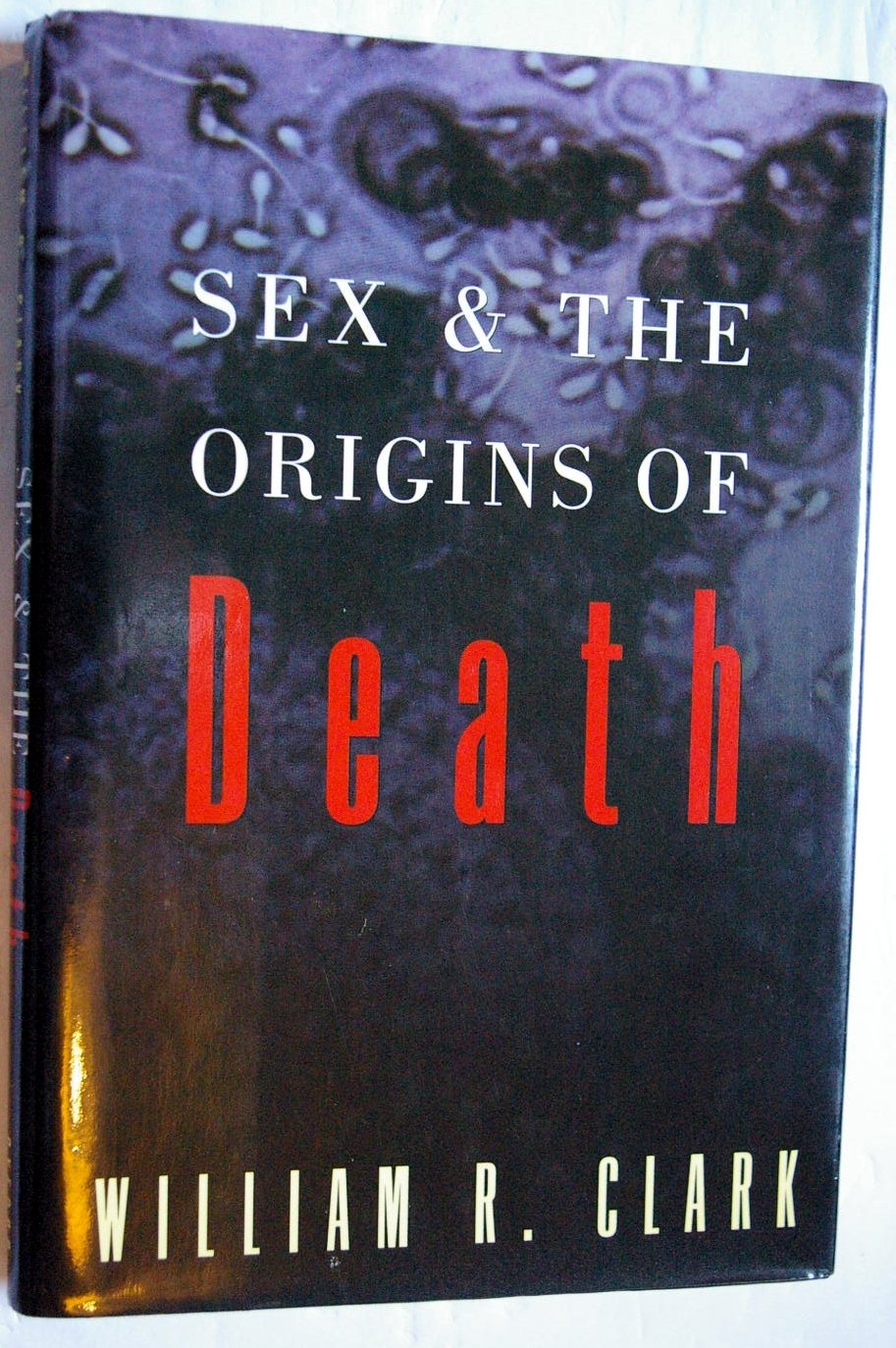
Sex and the Origins of Death
Regular price
$10.95 USD
Regular price
Sale price
$10.95 USD
Unit price
per
Shipping calculated at checkout.
Couldn't load pickup availability
Title: Sex and the Origins of Death
Author: William R Clark
ISBN: 9780195106442
Publisher: Oxford University Press
Published: 1996
Binding: Hardcover
Language: English
Edition: First Edition
Number of Pages: 208
Condition Note: Clean, unmarked copy with some edge wear. Good binding. Dust jacket included if issued with one. We ship in recyclable American-made mailers. 100% money-back guarantee on all orders.
Publisher Description: Why death? Is death an inextricable consequence of life? If not, where did death come from? In Sex and the Origins of Death, William R. Clark looks at life and death at the level of individual cells to address questions such as why we age, why cells die, and why sex and death seem to go hand in hand. Why must we die? To shed light on this question, Clark reaches far back in evolutionary history, to the moment when "inevitable death" (death from aging) first appeared. For cells during the first billion years, death, when it occurred, was accidental; there was nothing programmed into them that said they must die. But fierce competition gradually led to multicellular animals - size being an advantage against predators - and with this change came cell specialization and, most important, germ cells in which reproductive DNA was segregated from the DNA used to operate individual cells. When sexual reproduction evolved, it became the dominant form of reproduction on the planet, in part because mixing DNA from two individuals generates altogether new germline DNA. During this process, most mutations that have crept into the germline are corrected. But this does not happen in the other (somatic) cells of the body; the mutations are not corrected, and continue to accumulate. The somatic cells become, from a genetic point of view, both superfluous and dangerous. Nature's solution to this dilemma, Clark concludes, was programmed death - the somatic cells must die. Unfortunately, we are the somatic cells. Death is necessary to exploit to the fullest the advantages of sexual reproduction.
Author: William R Clark
ISBN: 9780195106442
Publisher: Oxford University Press
Published: 1996
Binding: Hardcover
Language: English
Edition: First Edition
Number of Pages: 208
Condition Note: Clean, unmarked copy with some edge wear. Good binding. Dust jacket included if issued with one. We ship in recyclable American-made mailers. 100% money-back guarantee on all orders.
Publisher Description: Why death? Is death an inextricable consequence of life? If not, where did death come from? In Sex and the Origins of Death, William R. Clark looks at life and death at the level of individual cells to address questions such as why we age, why cells die, and why sex and death seem to go hand in hand. Why must we die? To shed light on this question, Clark reaches far back in evolutionary history, to the moment when "inevitable death" (death from aging) first appeared. For cells during the first billion years, death, when it occurred, was accidental; there was nothing programmed into them that said they must die. But fierce competition gradually led to multicellular animals - size being an advantage against predators - and with this change came cell specialization and, most important, germ cells in which reproductive DNA was segregated from the DNA used to operate individual cells. When sexual reproduction evolved, it became the dominant form of reproduction on the planet, in part because mixing DNA from two individuals generates altogether new germline DNA. During this process, most mutations that have crept into the germline are corrected. But this does not happen in the other (somatic) cells of the body; the mutations are not corrected, and continue to accumulate. The somatic cells become, from a genetic point of view, both superfluous and dangerous. Nature's solution to this dilemma, Clark concludes, was programmed death - the somatic cells must die. Unfortunately, we are the somatic cells. Death is necessary to exploit to the fullest the advantages of sexual reproduction.