Columbia University Press
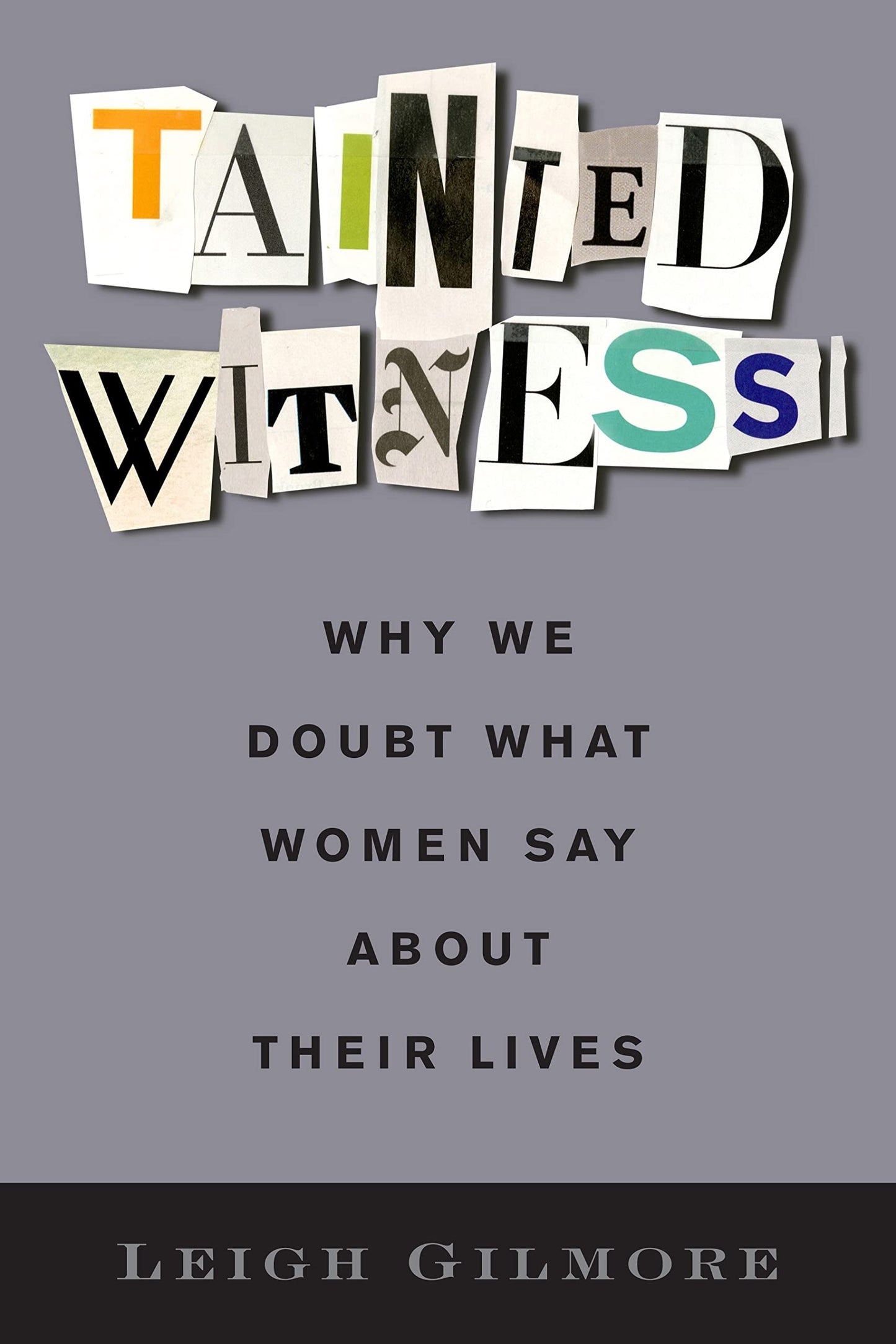
Tainted Witness: Why We Doubt What Women Say about Their Lives
Regular price
$11.95 USD
Regular price
Sale price
$11.95 USD
Unit price
per
Shipping calculated at checkout.
Couldn't load pickup availability
Title: Tainted Witness: Why We Doubt What Women Say about Their Lives
Author: Leigh Gilmore
ISBN: 9780231177146
Publisher: Columbia University Press
Published: 2017
Binding: Hardcover
Language: English
Number of Pages: 240
Condition Note: Clean, unmarked copy with some edge wear. Good binding. Dust jacket included if issued with one. We ship in recyclable American-made mailers. 100% money-back guarantee on all orders.
Publisher Description: In 1991, Anita Hill's testimony during Clarence Thomas's Senate confirmation hearing brought the problem of sexual harassment to a public audience. Although widely believed by women, Hill was defamed by conservatives and Thomas was confirmed to the Supreme Court. The tainting of Hill and her testimony is part of a larger social history in which women find themselves caught up in a system that refuses to believe what they say. Hill's experience shows how a tainted witness is not who someone is, but what someone can become. Why are women so often considered unreliable witnesses to their own experiences? How are women discredited in legal courts and in courts of public opinion? Why is women's testimony so often mired in controversies fueled by histories of slavery and colonialism? How do new feminist witnesses enter testimonial networks and disrupt doubt? Tainted Witness examines how gender, race, and doubt stick to women witnesses as their testimony circulates in search of an adequate witness. Judgment falls unequally upon women who bear witness, as well-known conflicts about testimonial authority in the late twentieth and early twenty-first centuries reveal. Women's testimonial accounts demonstrate both the symbolic potency of women's bodies and speech in the public sphere and the relative lack of institutional security and control to which they can lay claim. Each testimonial act follows in the wake of a long and invidious association of race and gender with lying that can be found to this day within legal courts and everyday practices of judgment, defining these locations as willfully unknowing and hostile to complex accounts of harm. Bringing together feminist, literary, and legal frameworks, Leigh Gilmore provides provocative readings of what happens when women's testimony is discredited. She demonstrates how testimony crosses jurisdictions, publics, and the unsteady line between truth and fiction in search of justice.
Author: Leigh Gilmore
ISBN: 9780231177146
Publisher: Columbia University Press
Published: 2017
Binding: Hardcover
Language: English
Number of Pages: 240
Condition Note: Clean, unmarked copy with some edge wear. Good binding. Dust jacket included if issued with one. We ship in recyclable American-made mailers. 100% money-back guarantee on all orders.
Publisher Description: In 1991, Anita Hill's testimony during Clarence Thomas's Senate confirmation hearing brought the problem of sexual harassment to a public audience. Although widely believed by women, Hill was defamed by conservatives and Thomas was confirmed to the Supreme Court. The tainting of Hill and her testimony is part of a larger social history in which women find themselves caught up in a system that refuses to believe what they say. Hill's experience shows how a tainted witness is not who someone is, but what someone can become. Why are women so often considered unreliable witnesses to their own experiences? How are women discredited in legal courts and in courts of public opinion? Why is women's testimony so often mired in controversies fueled by histories of slavery and colonialism? How do new feminist witnesses enter testimonial networks and disrupt doubt? Tainted Witness examines how gender, race, and doubt stick to women witnesses as their testimony circulates in search of an adequate witness. Judgment falls unequally upon women who bear witness, as well-known conflicts about testimonial authority in the late twentieth and early twenty-first centuries reveal. Women's testimonial accounts demonstrate both the symbolic potency of women's bodies and speech in the public sphere and the relative lack of institutional security and control to which they can lay claim. Each testimonial act follows in the wake of a long and invidious association of race and gender with lying that can be found to this day within legal courts and everyday practices of judgment, defining these locations as willfully unknowing and hostile to complex accounts of harm. Bringing together feminist, literary, and legal frameworks, Leigh Gilmore provides provocative readings of what happens when women's testimony is discredited. She demonstrates how testimony crosses jurisdictions, publics, and the unsteady line between truth and fiction in search of justice.